
In Part 1, we covered washability, carbon fiber efficiency, and tensile-tested wiring harnesses. Yet even a well-wired heating element underperforms if thermal regulation and fabric heat retention are treated as afterthoughts. With 23 years of wearable thermal manufacturing experience, MEC ADDHEAT breaks down how smart temperature controllers and dual-layer heating pad fabrics turn raw heat into safe, consistent warmth for brand PMs and sourcing managers.
The Temperature Controller: The “Brain” Behind Every Heat Level
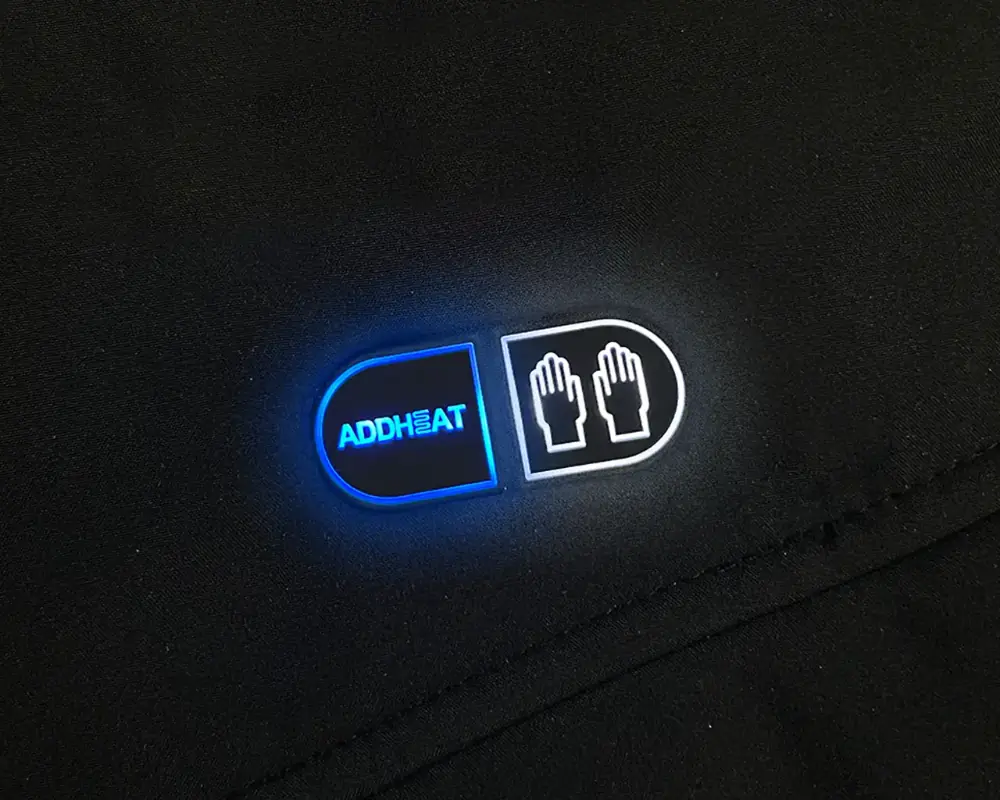
To an outside observer, the glowing button on a jacket looks like a simple switch. For apparel engineers and sourcing buyers, the controller is the true “brain” of the heated garment.
-
Multi-Zone & Duty-Cycle Logic: Internal firmware manages multi-level temperature settings—such as High, Medium, and Low—as well as single-zone or dual-zone heating control. Even the LED indicator behavior is driven by programmed duty-cycle logic mapped to each power level.
-
Real-Time NTC Thermal Feedback: An NTC temperature sensor embedded on the heating pad continuously monitors real-time temperatures and feeds signals back to the controller for dynamic thermal regulation.
-
Failure Impact & Encapsulation: If the controller fails, the entire jacket can lose reliable thermal control. That is why we encapsulate precision internal components using top-grade Japanese specialty potting compound, enabling our controllers to pass 100,000-cycle button actuation tests—far beyond typical consumer usage—backed by a 2-year warranty.
Heating Pad Fabrics: Locking Heat Inward Instead of Losing It Outside
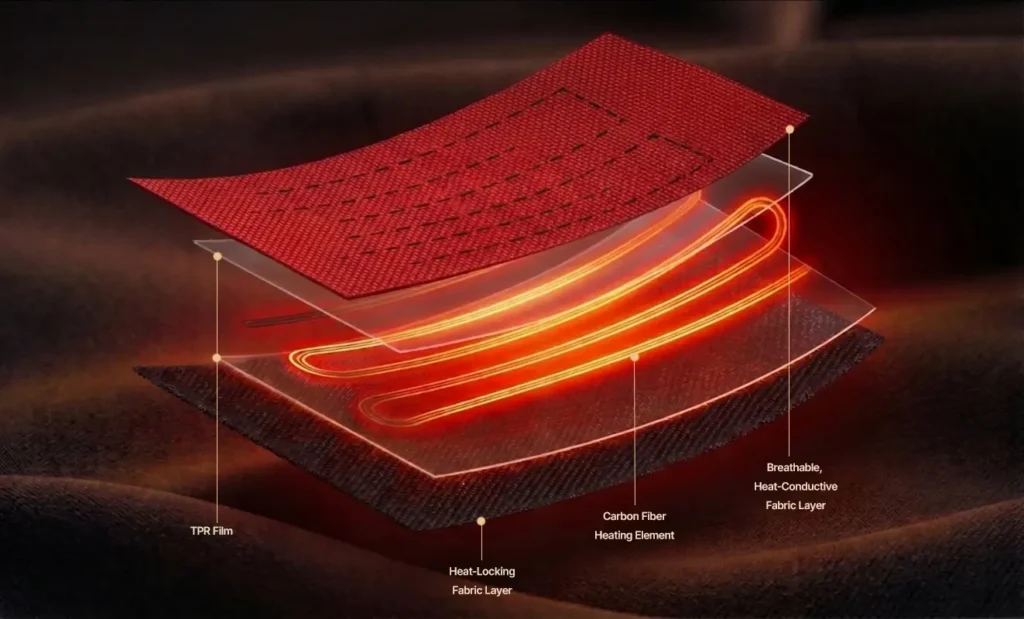
During on-site visits, buyers sometimes bring competitor heating pads with eye-catching surface prints—only to find that cheap polyester pad fabrics conduct heat poorly and waste energy.
-
Asymmetric Heat Management: We engineer heating pads with a thin, high-conductivity layer facing the wearer’s body to maximize heat transfer, paired with a thicker insulating layer facing the outer environment to lock heat inside.
-
Measured Thermal Retention: This asymmetric construction helps create a temperature differential of more than 5°C between the inner and outer sides of the pad, directing warmth where the wearer needs it rather than radiating it away into cold air.
-
100% Factory Verification: Every heating module undergoes 100% thermal imaging checks and every controller undergoes 100% functional testing before leaving our facility, supporting a less than 0.1% defect rate after 1 year of real-world use.
Frequently Asked Questions (FAQ) for Brand PMs & Sourcing Managers
Q: Why is an NTC sensor necessary when a garment already has high, medium, and low heat settings? A: Power levels alone do not account for ambient cold or garment insulation changes. An NTC probe provides continuous feedback so the controller regulates output dynamically and prevents overheating.
Q: Can Addheat customize controller zones and pad constructions for different outerwear styles? A: Yes. We support tailored single-zone or dual-zone configurations and pad layouts for jackets, vests, and specialty gear.
Talk with Our Team & Revisit Part 1
Missed the foundation on laundry durability, carbon fiber efficiency, and wiring safety? Catch up in Part 1: Washability, Carbon Fiber & Wiring first. Ready to build safer, warmer outerwear with our engineering team? Talk with MEC ADDHEAT or book a free consultation to review technical specifications, turnkey modules, or a factory/remote audit (Standard MOQ: 500 units).
 English
 Chinese