
In the early days of heated apparel, active warmth felt like a bold experiment rather than an everyday norm. Looking back at three archival publications from our early years—spanning 2008 collaborations with Nomis, early Japanese magazine coverage of Venture Heat, and a 2012 Oxford catalog spotlighting heated motorcycle gloves—reveals how far wearable thermal gear has come. With 23 years of specialized R&D and manufacturing, MEC ADDHEAT honors those early milestones while continuing to push thermal engineering forward, from 7.4V battery systems and 12V powersports gear to heated diving equipment built for depths down to 100 meters.
Bold Style and Early Warmth: Collaborating with Nomis Around 2008
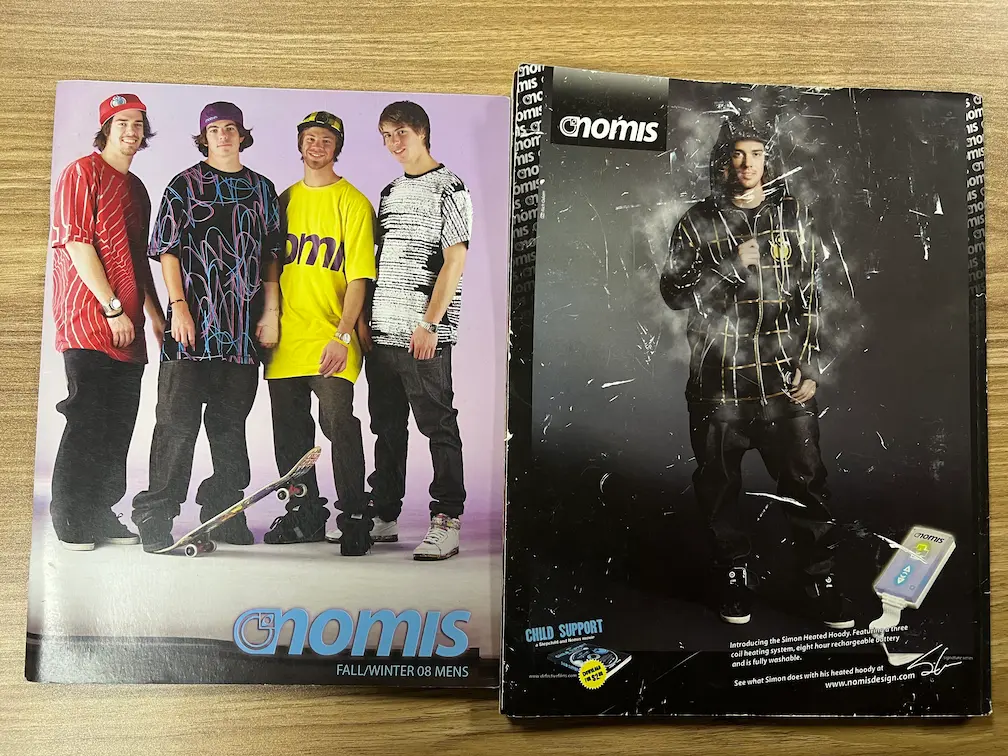
Among the brands we collaborated with starting as early as 2008, Nomis left a lasting impression. Founded by pro snowboarder Simon Chamberlain along with his brother Matt and Andre—with the brand name spelled “Simon” backward—Nomis grew out of core skate and snowboard culture rather than conventional outerwear.
At a time when much of today’s heated apparel leans toward quiet, understated, mass-market tones, Nomis stood out with vivid colors, expressive graphics, and unapologetic street and snow style. Integrating our heating systems into garments worn by trendsetters, skaters, and snowboarders reflected a simple belief that riders and city commuters should not have to choose between bold personal style and real warmth in the cold.
Early Japanese Magazine Coverage: Venture Heat, Red-and-Black Systems, and the 602A Battery
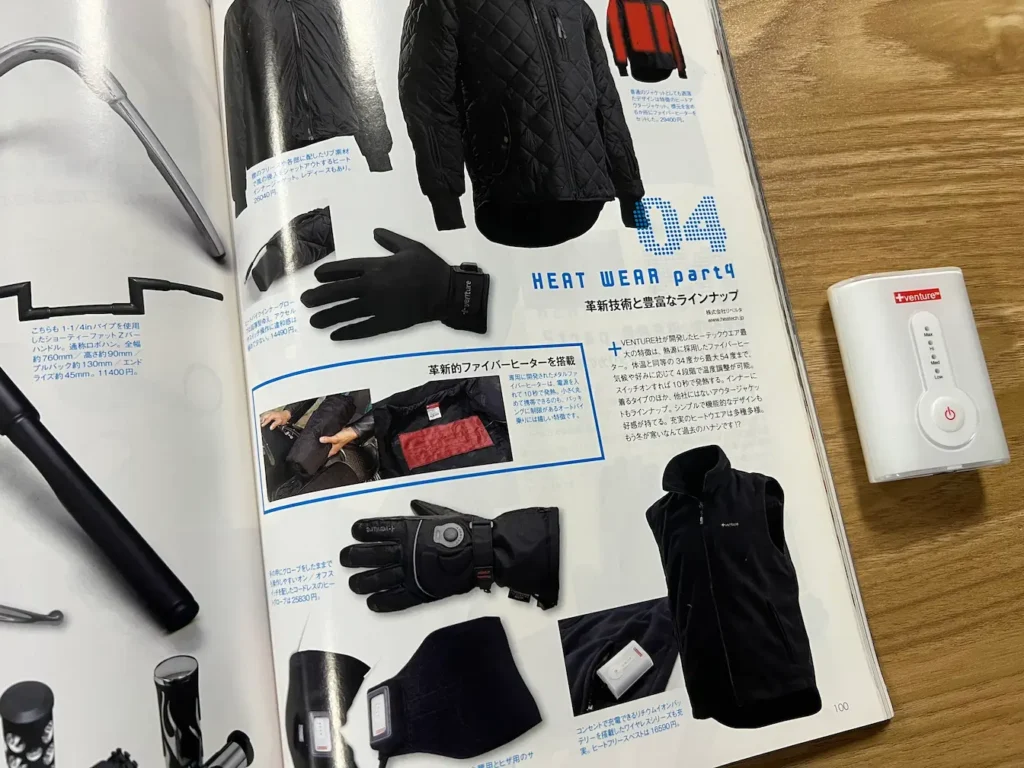
A second archival piece—an early Japanese magazine feature—documents early Venture Heat heated jackets and heated gloves, including interior construction details, our recognizable red-and-black heating system, and our 602A battery.
Seeing those early systems laid out in print captures a foundational chapter of our engineering history. Beginning with early 7.4V battery-powered solutions and building out dedicated product lines for jackets, gloves, and garment integration shaped how we approached wire routing, thermal balance, and real-world durability long before heated apparel became commonplace.
A 2012 Turning Point: Heated Gear in Oxford’s Catalog
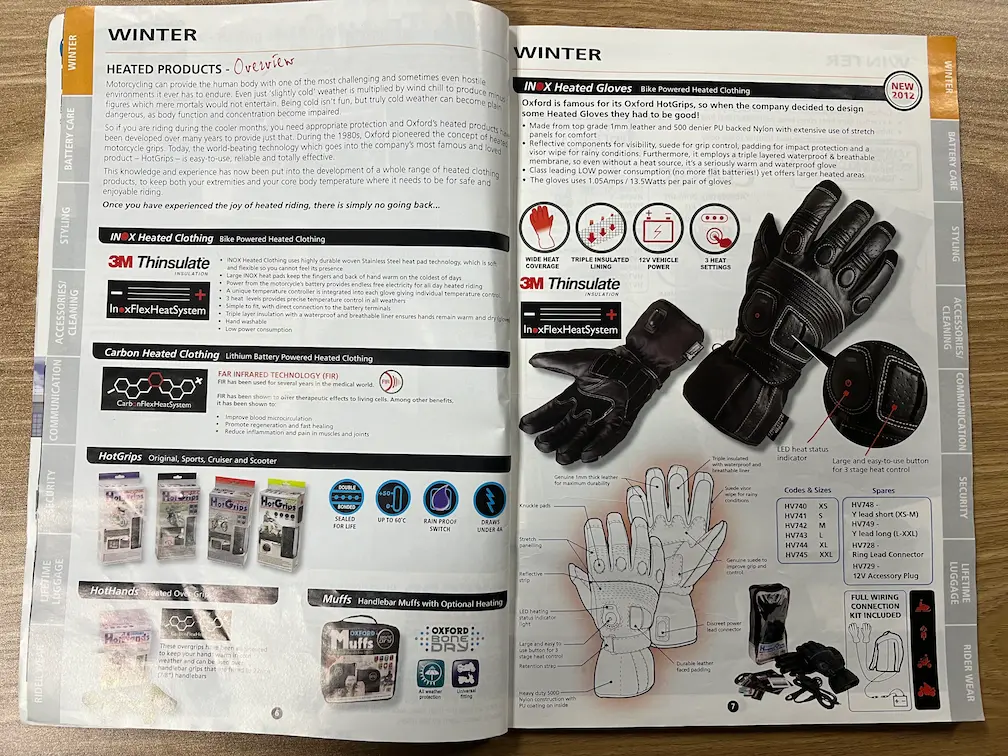
A third archival catalog from Oxford gave prominent space to its latest heated motorcycle gloves around 2012. Back in 2012, heated clothing and accessories still felt fresh, exciting, and trend-forward, with partner brands putting major energy into introducing riders to active warmth.
Today, heated apparel is far more visible in everyday life and no longer surprises people at first glance. Even so, the feeling of genuine warmth arriving when winter sets in still brings a quiet sense of appreciation—especially for riders, outdoor enthusiasts, and workers facing bitter cold.
Gratitude for the Past, Engineering for the Future—Down to 100 Meters
As a manufacturer and R&D team with 23 years in the field, we carry both gratitude for where we started and momentum toward what comes next. Our roots in early battery systems and powersports gear ground our daily work, while our engineering team continues to expand what wearable thermal technology can do.
That forward drive has led us to develop heated diving gear engineered for depths down to 100 meters in saltwater, expanding where people can comfortably go and work. At our 7,200 m² Kaiping facility, our 300+ team operates “Under One Roof” on an hourly wage system rather than piece-rate pay, with 100% thermal imaging inspection on every heating module and a <0.1% defect rate after 1 year of real-world use (validated across 50+ commercial wash/dry cycles with <5% thermal degradation).
Frequently Asked Questions (FAQ) for Apparel Brand PMs & Sourcing Managers
Q: How does Addheat adapt heating systems for fashion-forward or lifestyle brands without sacrificing garment feel?
A: We engineer flexible heating matrices and compact power layouts tailored to different silhouettes, working closely on placement and wiring so garments keep their intended drape, comfort, and style.
Q: Do you manufacture both battery-powered heated apparel and 12V powersports or specialized cold-water gear?
A: Yes. Alongside 7.4V and 11V battery-powered apparel and 12V powersports solutions, we engineer specialized thermal systems, including heated diving gear rated for depths down to 100 meters (with post-use freshwater rinsing and proper storage outside prolonged saltwater immersion).
Q: Can brands without in-house electronics engineers work with Addheat on custom projects?
A: Yes. We supply turnkey certified heating modules plus step-by-step sewing and installation tutorials to support smooth integration.
Build What’s Next with a 23-Year Thermal Engineering Partner
Whether your next collection blends street and snow style, powersports performance, or extreme-environment protection, we invite you to connect with our Kaiping team for technical consultation, or an on-site or remote video factory audit (Standard MOQ: 500 units).
 English
 Chinese