
In the competitive landscape of heated apparel, brands are constantly looking for the next big selling point. Recently, a troubling marketing trend has spiraled out of control: the race to add more heating panels.
What started as 8 or 10 zones has now escalated to extremes. A quick search on public e-commerce platforms today reveals jackets boasting 20, 30, or even 38+ separate heating zones.
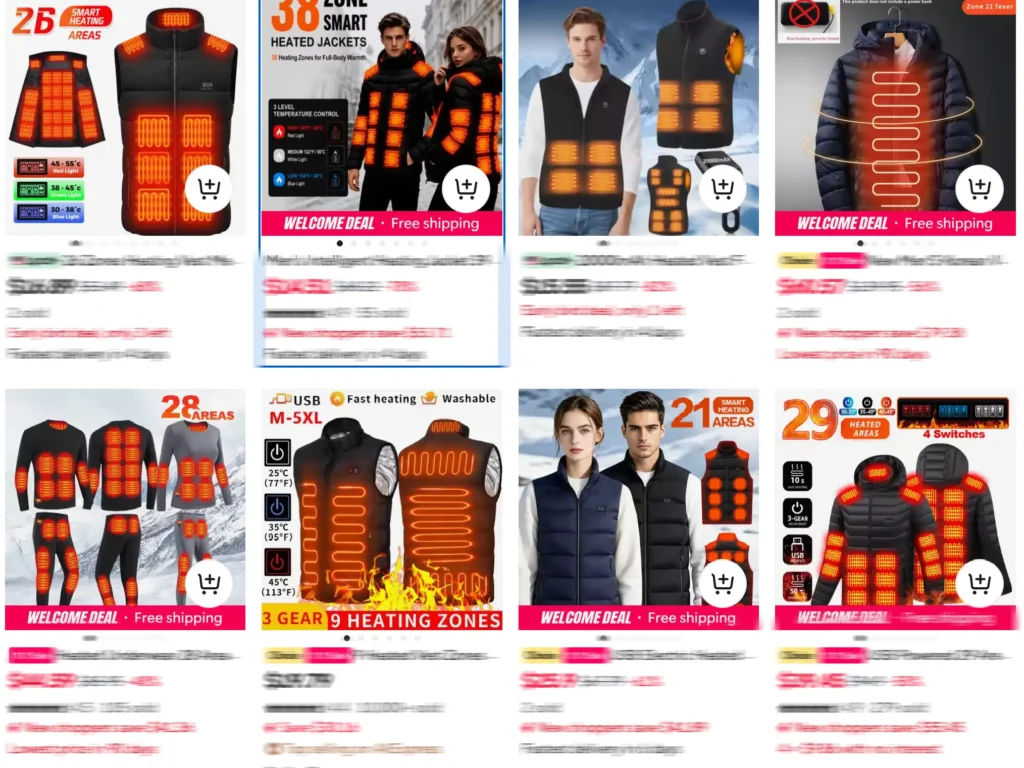
On paper, it sounds impressive to the everyday consumer. More panels must equal more warmth, right?
As an OEM Product Engineer with 23 years of experience in thermal technology, I need to set the record straight: Adding more panels without increasing total power doesn’t make the garment warmer. It actually makes it colder.
Here is the engineering reality behind the marketing hype, and why strategic, high-power systems are the true future of winter gear.
The Physics of Heat: Power Density vs. Surface Area
The actual warmth generated by a heated garment is determined by the total wattage (power) of the battery system and how efficiently that energy is concentrated.
Most budget heated jackets rely on standard 5V or 7.4V batteries, typically outputting around 10W to 15W of total power. When a manufacturer stretches that same limited energy from 4 core zones across 20, 30, or 38 tiny heating patches, the total energy doesn’t magically multiply—it gets diluted.
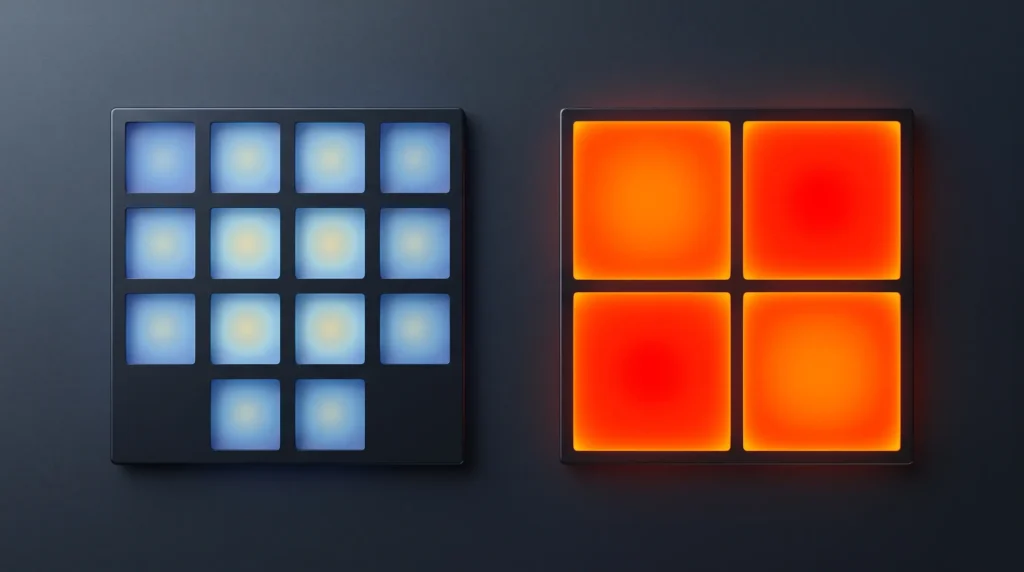
This drastically drops the power density (Watts per square centimeter). The result is a jacket covered in wires and micro-patches, none of which get hot enough to penetrate base layers and warm the wearer in freezing conditions.
Recently, a client brought us a competitor’s 8-panel system to evaluate. Even at 8 panels, the active heating area per zone was tiny, and the warmth was barely noticeable in a cold room. Pushing that same flawed logic to 30+ panels isn’t innovation—it’s pure marketing gimmickry at the expense of user experience.
The Challenge of High-Power Systems
If real warmth requires higher wattage, why don’t more manufacturers simply increase the power?
Because engineering a high-power wearable system is inherently difficult. Achieving the right balance between intense thermal output, long battery life, wearer comfort, and—above all—safety, requires deep technical expertise.
Many inexperienced factories attempt to push higher currents through substandard wiring and cheap fabrics to chase quick heat. This reckless approach leads to localized overheating, melted linings, premature system failure, and in the worst cases, serious safety incidents. In the heated apparel industry, cutting corners on safety doesn’t just trigger returns; it destroys brand trust and endangers the consumer.
The Addheat Solution: 23 Years of Market-Validated Safety
At Addheat, we believe true performance comes from strategic placement and concentrated, high-energy systems backed by uncompromising safety protocols.
Instead of scattering weak heat across dozens of gimmicky spots, our high-power architectures—capable of supporting extreme-weather gear rated for -40°C environments—deliver deep, penetrating warmth directly to the body’s core thermal zones.
We never gamble with consumer safety or brand value. That is why 100% of our products are equipped with NTC (Negative Temperature Coefficient) precision control technology.
This system acts as an intelligent thermal watchdog. It continuously monitors the microclimate inside the garment, regulating heat output with a precision of ±1°C. If any zone begins to overheat due to external pressure, folding, or internal faults, the NTC system instantly throttles the power, ensuring the wearer is never exposed to dangerous temperatures.
Elevate Your Brand with Real Performance
Marketing 30+ heating panels might grab a quick click, but delivering genuine, deep warmth in sub-zero conditions builds lifelong customer loyalty. A high-energy, intelligently regulated system speaks volumes about your brand’s commitment to quality and engineering.
Are you developing a premium cold-weather product line and want to ensure your thermal technology matches your brand’s ambitions? Let’s engineer a system that actually works.
 English
 Chinese